Leshan Travel Notes
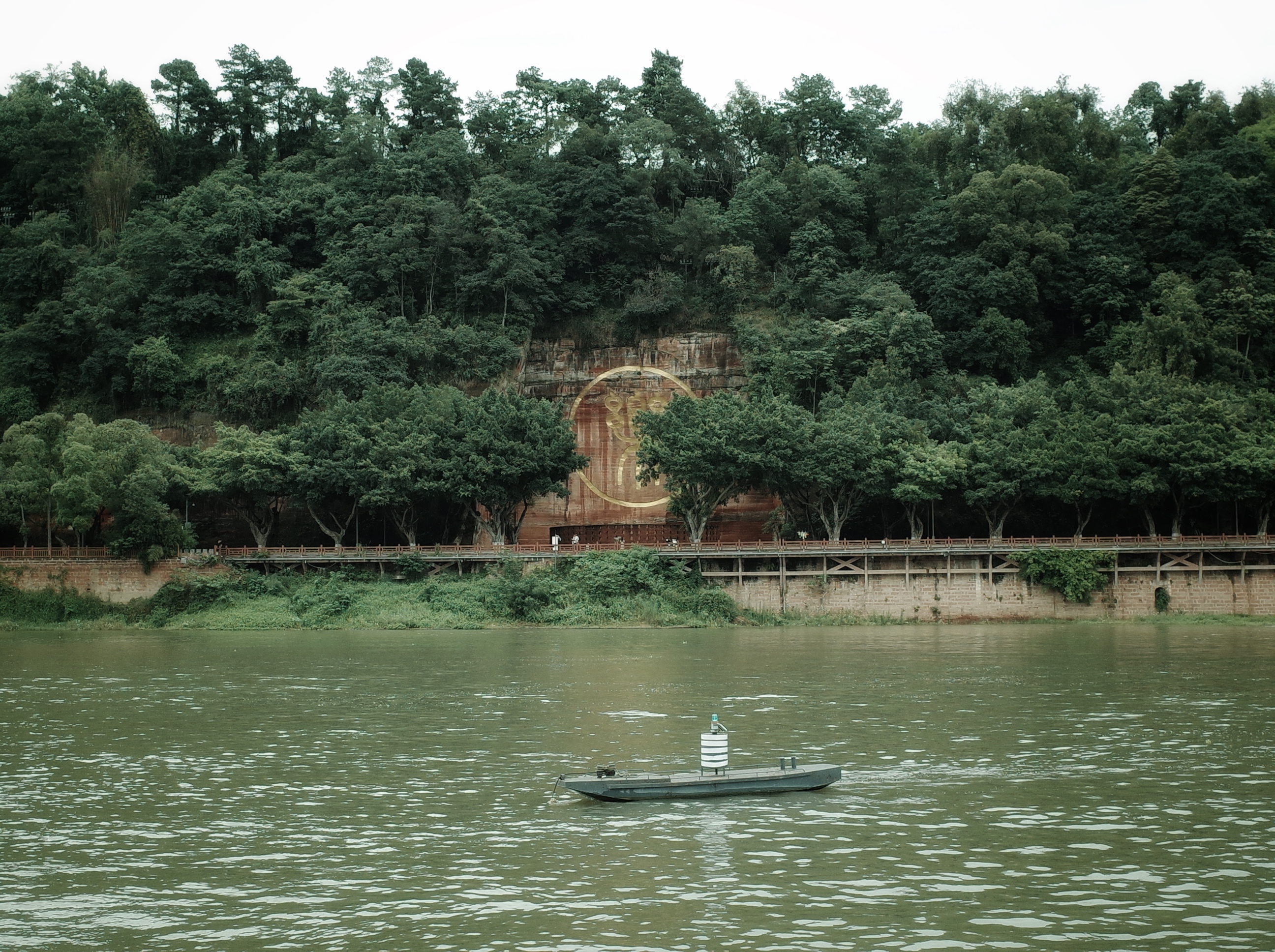
Recently the work pace has slowed down and I have more time for myself. I decided to visit Leshan. I had long heard of its reputation as a city of snacks, but since moving to Chengdu I’ve been traveling for work all over the country, and had never once visited this city that is just a 50-minute high-speed train ride away. That really wouldn’t do.
Being a master of time management, I left home at 6 AM on Saturday and arrived at Leshan Station just past 8. First, I needed to find a breakfast shop for a bowl of Leshan tofu pudding (doufu nao), one of my favorite snacks in Chengdu, and I was looking forward to the original local version. Many shops hadn’t opened yet, so I walked all the way to the food street across from the train station before I found one. I sat down and ordered a bowl of crispy pork tofu pudding and a beef sandwich (ka bing).
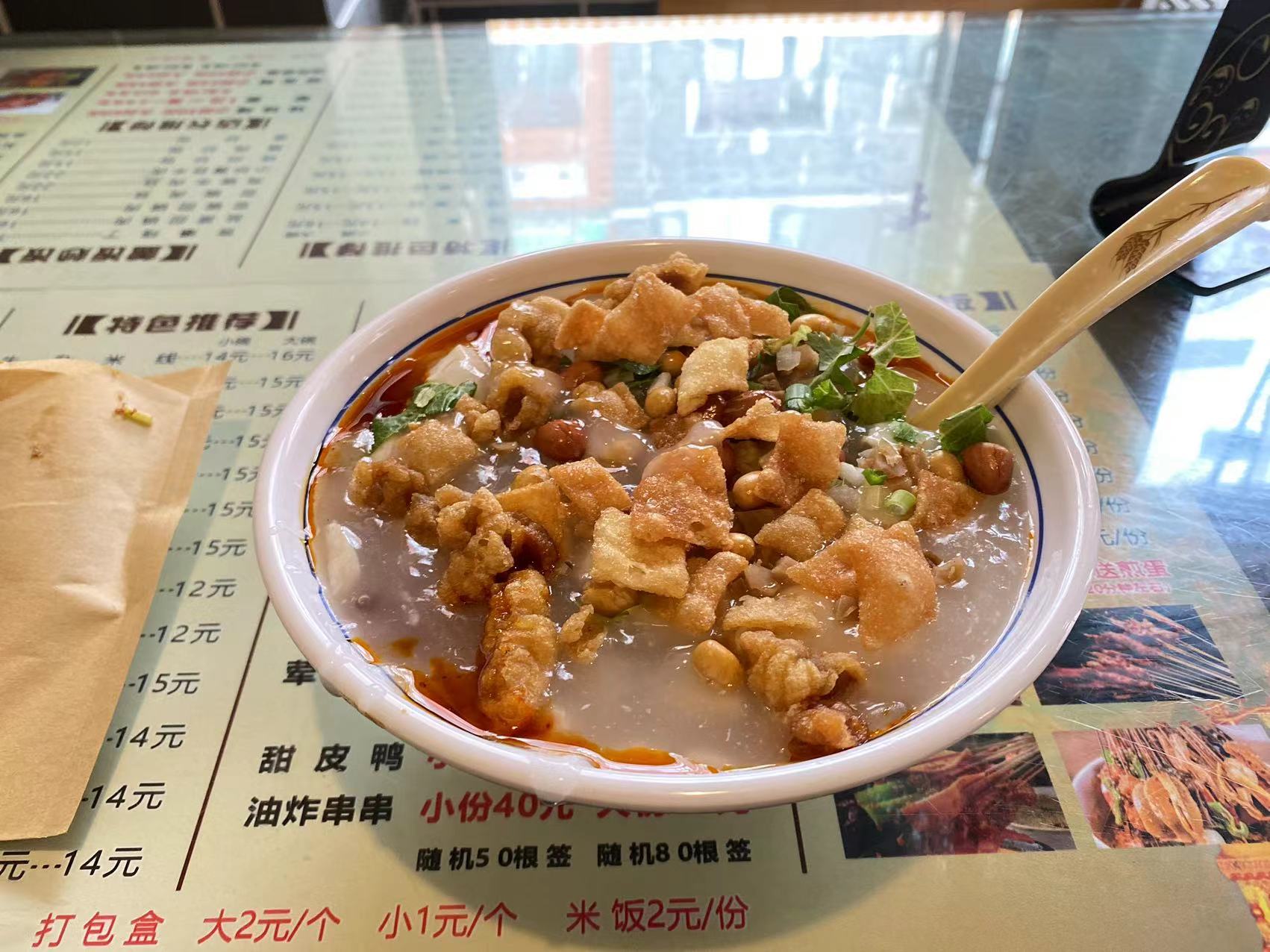
Leshan tofu pudding is a bit different from the northern version. Its main components are soybean curd (douhua) and sweet potato glass noodles. In a thick soup of soybean curd and glass noodles, you add fried soybeans, peanuts, beef (or crispy pork, shredded chicken), and cilantro. Chili oil is drizzled on top, and sometimes some thin crispy crackers are added. What you taste in your mouth is a smooth, salty, and spicy broth with the crispy texture of meat and soybeans. The soybean curd used in Leshan’s local tofu pudding seems different from the small shops in Chengdu—it’s a bit firmer than silken tofu, and the broth is more flavorful.
The beef ka bing is essentially the Sichuan version of a meat sandwich. Beef is chopped up, then steamed with seasonings like scallions, ginger, and garlic using the technique for steamed pork with rice flour, and stuffed into a soft flatbread. Early in the morning, the meat had just come out of the pot, and watching the owner stuff steaming hot meat into the bread, it smelled amazing!
After eating my fill, the first destination was the Leshan Giant Buddha.
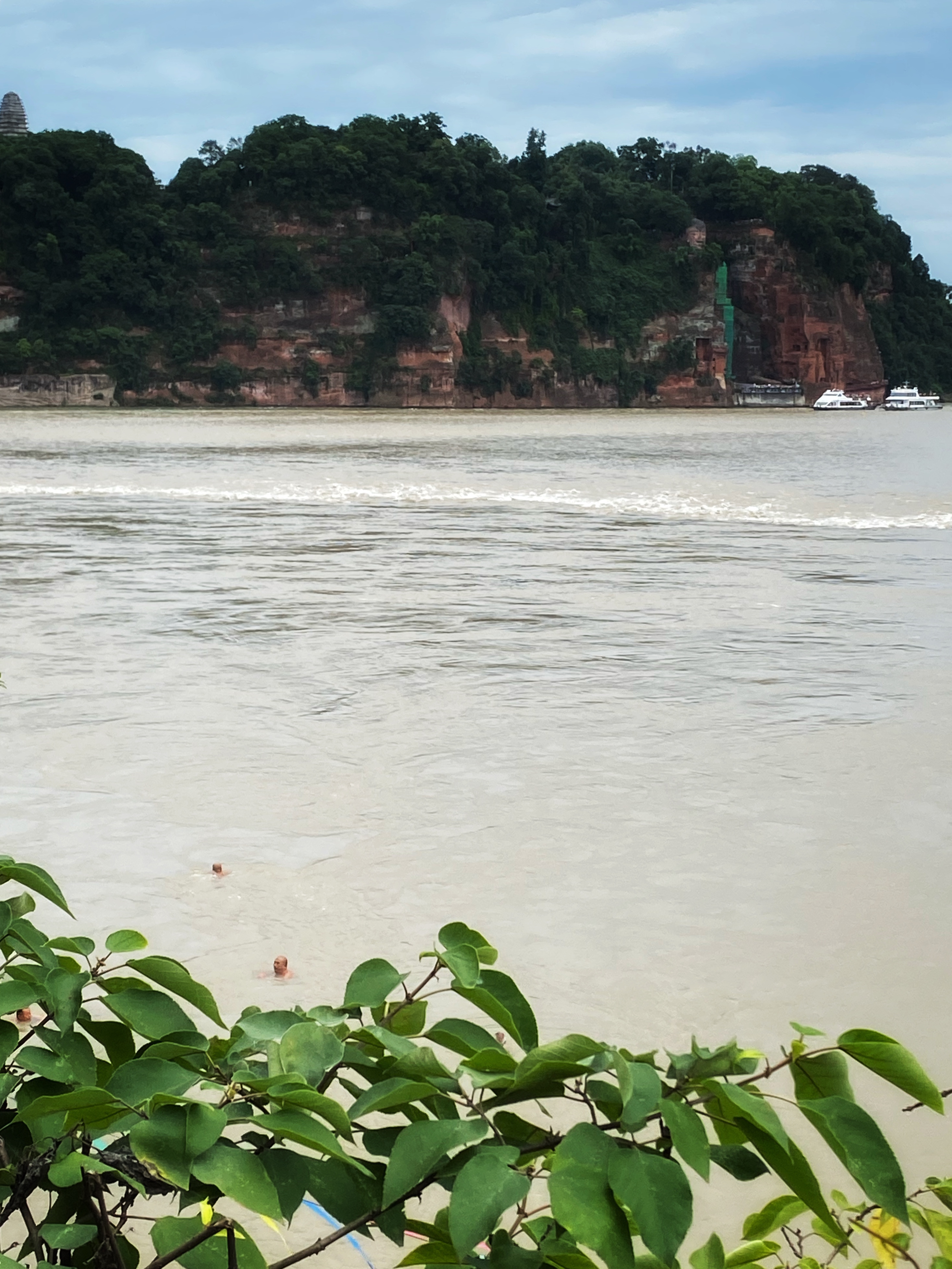
The Leshan Giant Buddha is easy to find on a map. The city of Leshan isn’t large; the entire city is located at the confluence of three rivers. The Giant Buddha sits at the meeting point of the three rivers, facing Mount Emei.
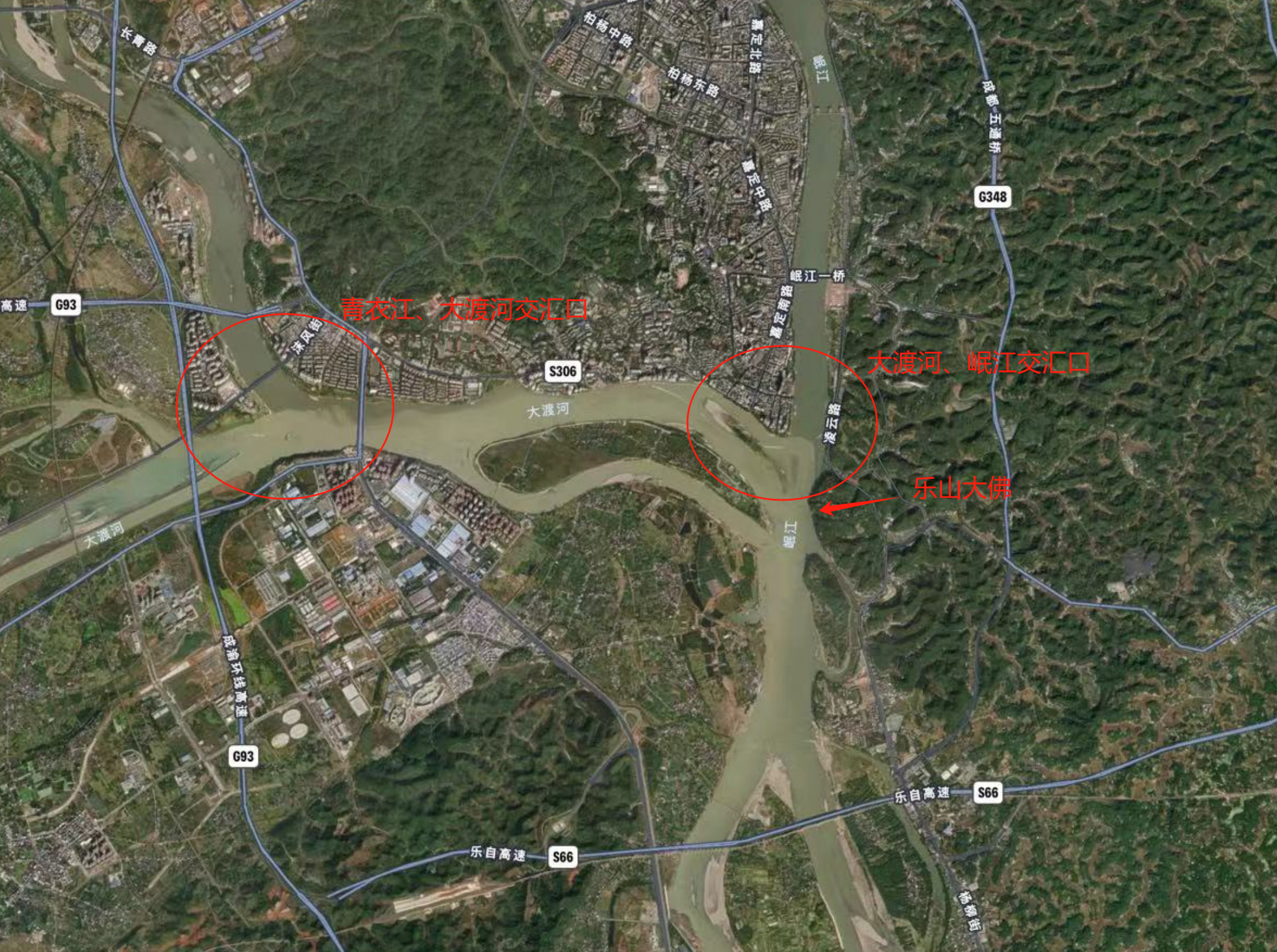
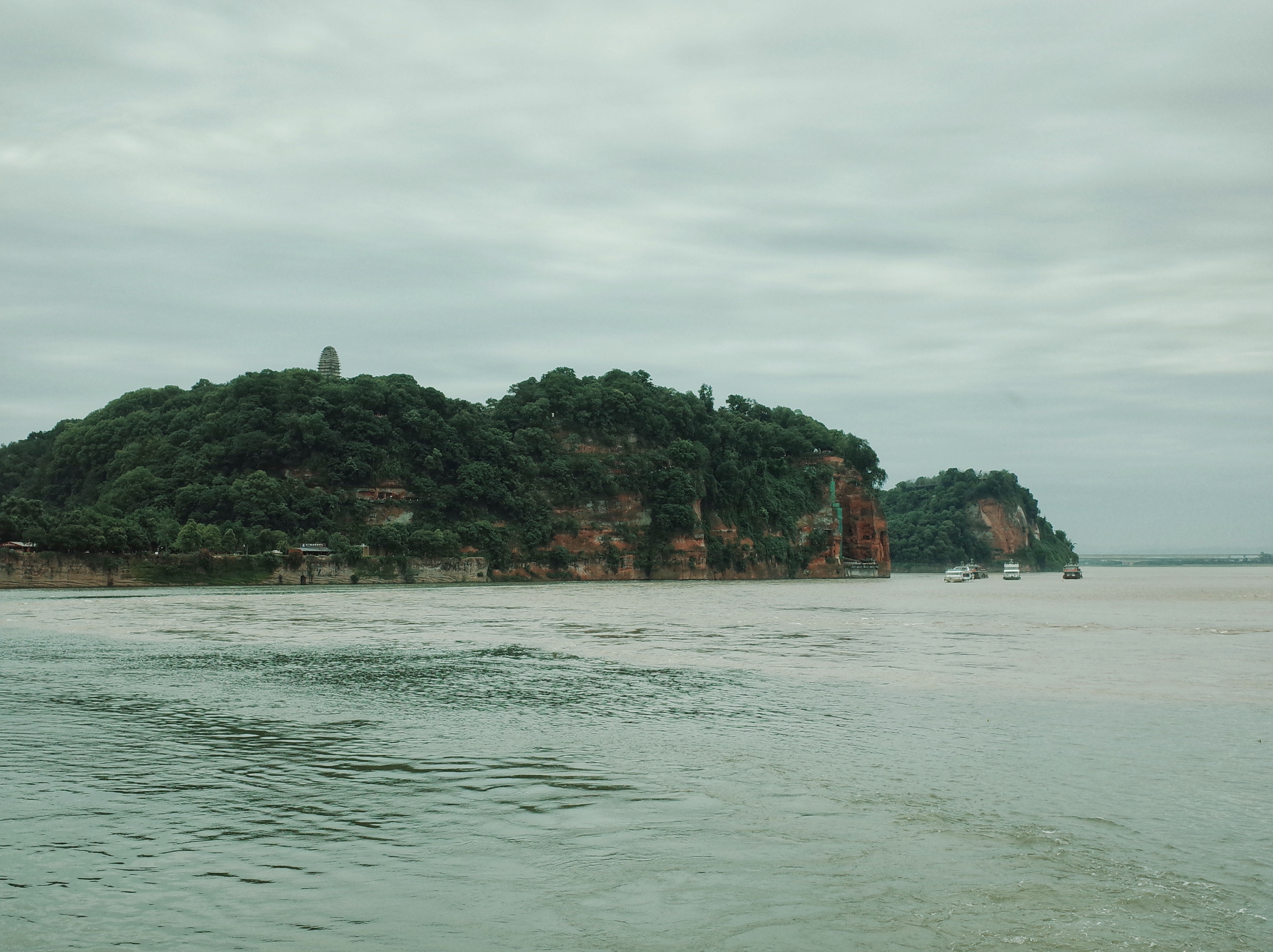
You can see from the map that the Dadu River carries more sediment, and its water is yellowish. The Min River, on the other hand, is a green-blue color. At the confluence in front of the Buddha, a very clear dividing line is formed.
After a 40-minute taxi ride, I arrived at the scenic area. There are two types of tickets: by boat or by climbing the mountain. This small Lingyun Mountain has been carved by the locals into two paid routes—mountain and water—much like Sichuan snack culture, where one dish can be prepared many different ways.
I chose the more relaxing boat ride. The boat set out from the Jiazhou Ferry on the Min River, and by the time it reached the confluence with the Dadu River, the water had already begun to turn from green to yellow.
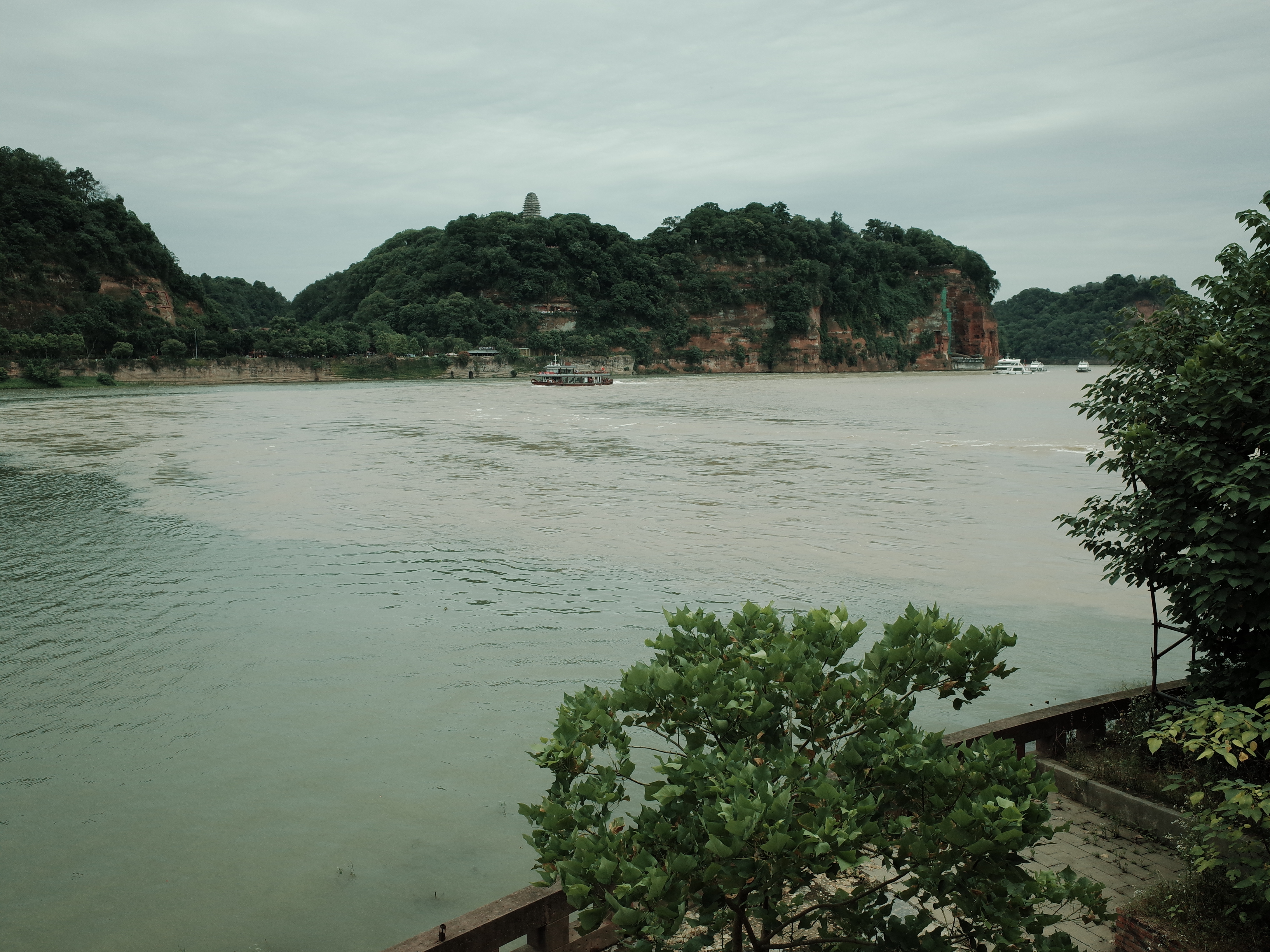
After another ten-odd minutes, we arrived at the foot of the Buddha. The Buddha’s left foot came into view first, and the guardian figures on either side of the Buddha have been smoothed of their edges by a thousand years of river wind.
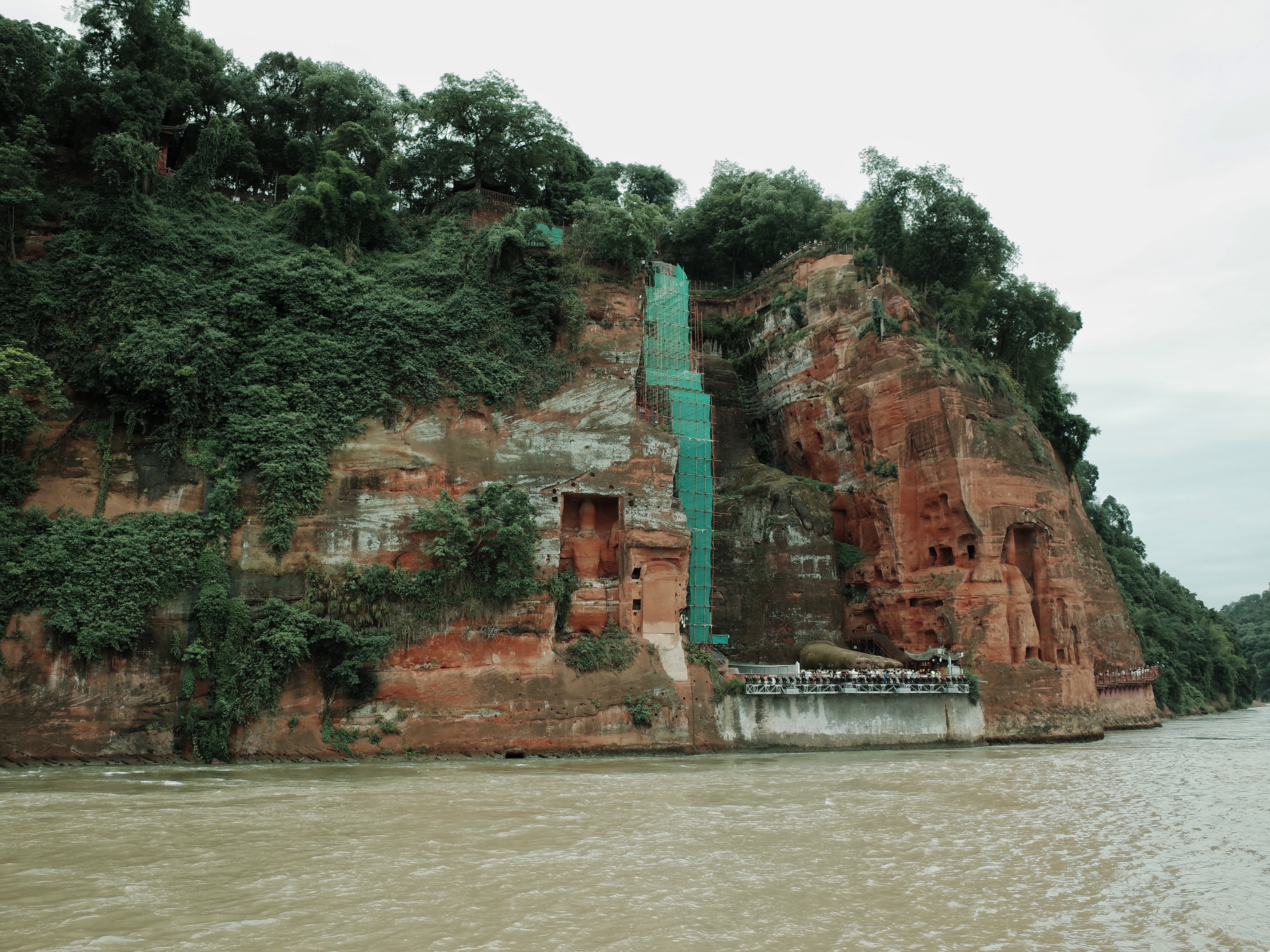
The Leshan Giant Buddha project was started in the Tang dynasty and took three generations of project managers to complete. Even today, it continues to be repaired.
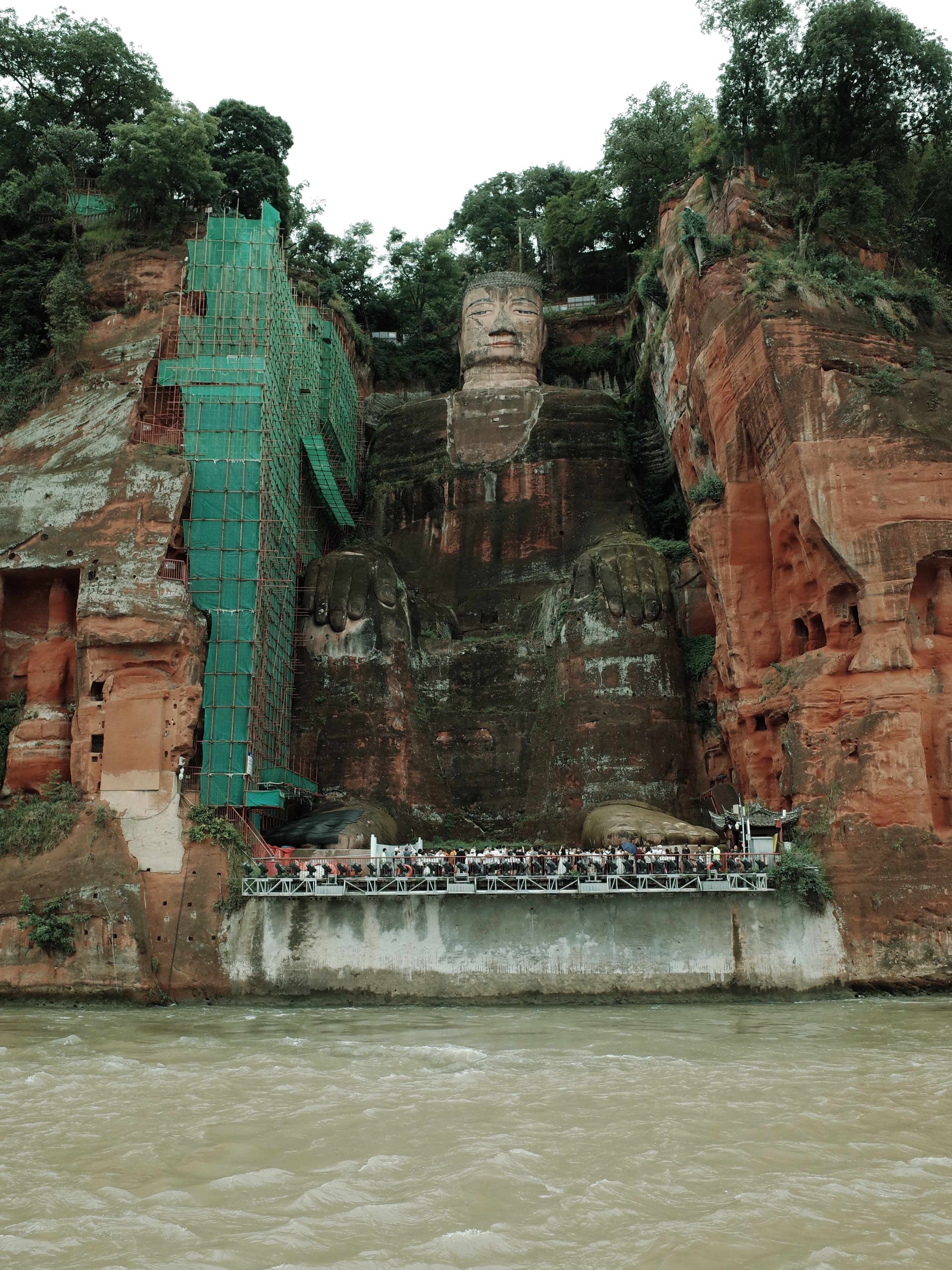
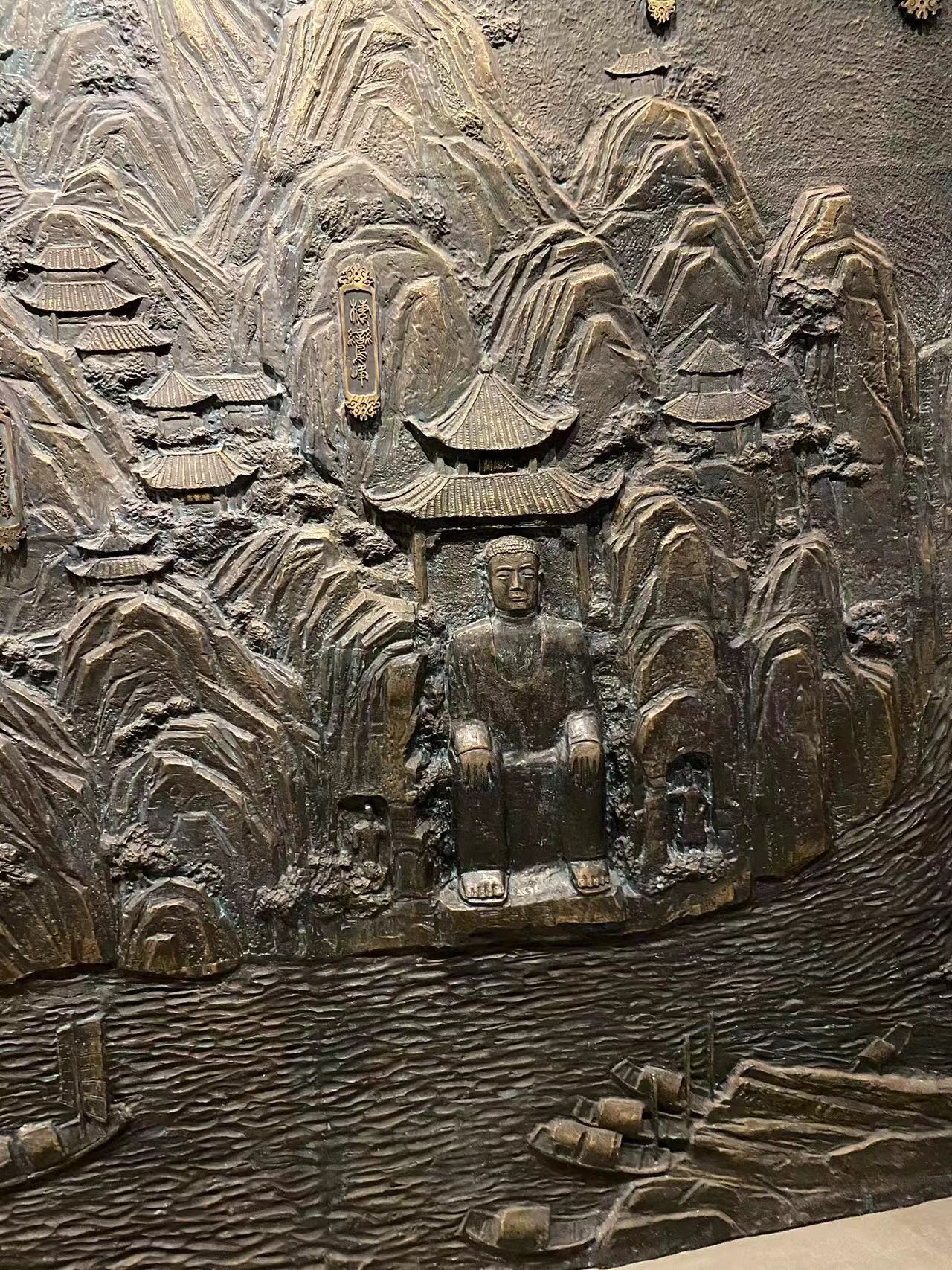
There are many square holes in the cliffs around the Buddha, which were used to erect scaffolding. Legend has it that the Buddha was originally enclosed in a seven-story building called the “Great Image Pavilion” (Daxiang Ge), but it was destroyed in history. You can still see a lot of related information in the Leshan Museum. The museum also has some interesting trivia: each of the circular curls on the Buddha’s head is a long strip of stone. Craftsmen first carved slots into the Buddha’s head and then embedded these strip-shaped “wisdom roots” into them. This may be the earliest modular design.
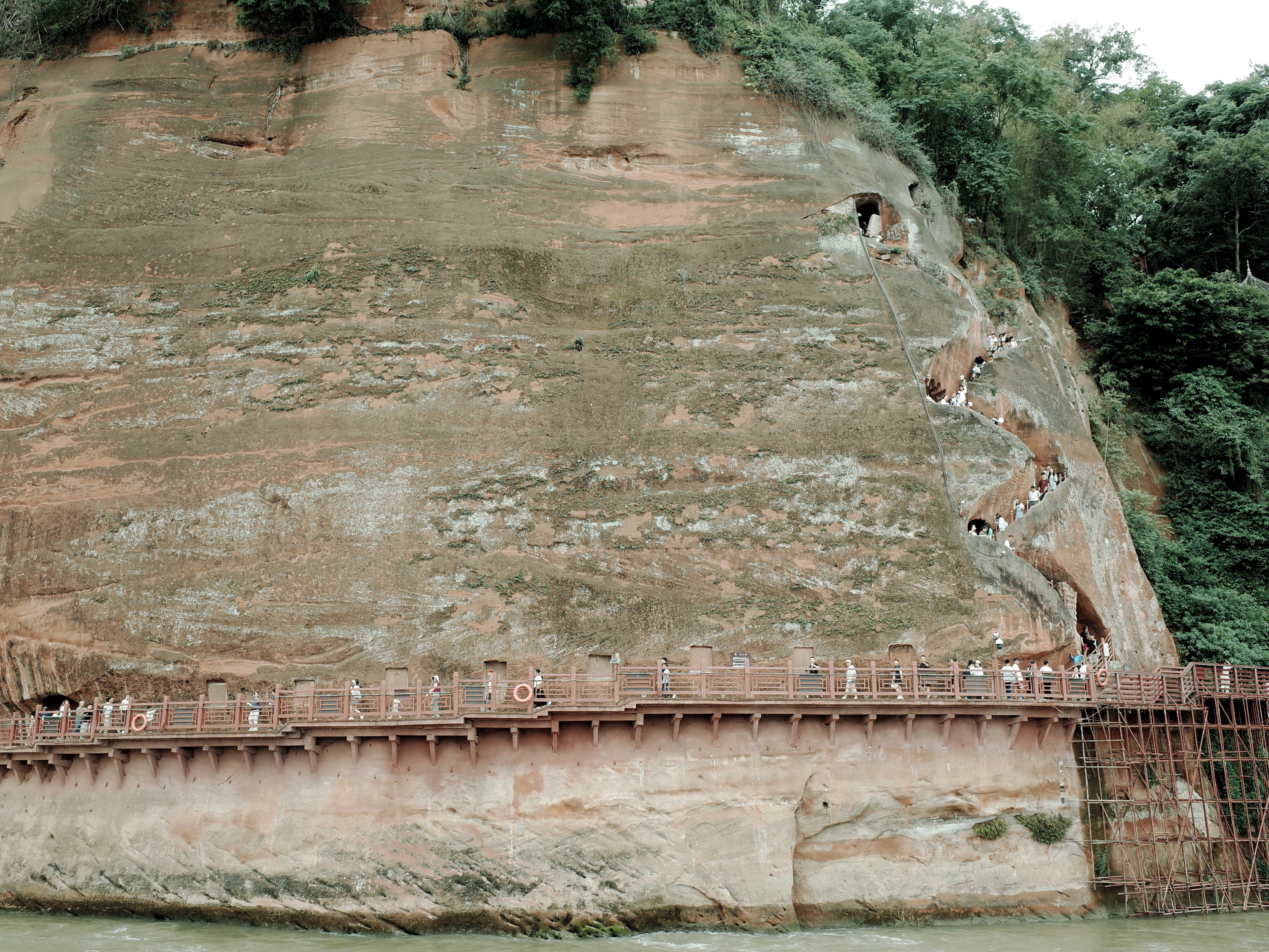
Continuing on, around the Buddha, you can see Lingyun Mountain’s plank walkways and ant-trail-like paths. If you’d chosen the climbing ticket, you’d appear here like a little ant among the other tourists. Lingyun Mountain is actually just a small hill on the river, and the fact that they were able to carve paths in such a smooth, sheer place—I really admire the perseverance of the ancients.
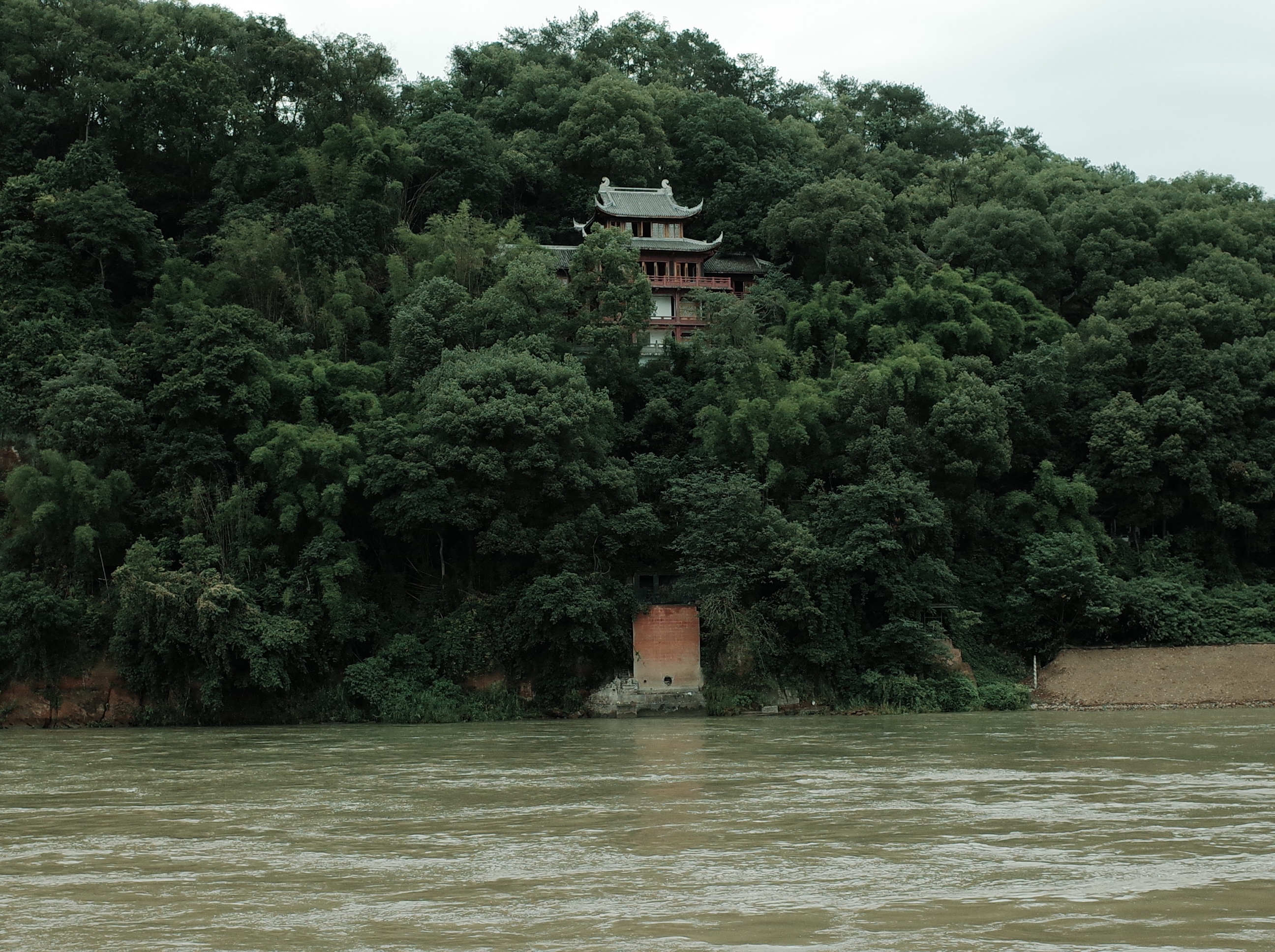
On the way back, standing at the stern of the boat, you can see the distant silhouette of Lingyun Mountain forming the image of a reclining Buddha lying on its right side. This reclining figure is the spiritual totem of Leshan.
Leaving the Leshan Giant Buddha scenic area, I continued to explore Leshan’s food! I took a bus to the Shangzhongshun特色街区 (Shangzhongshun Special Street District).
Shangzhongshun has many snacks, like Ye Popo’s bobochi (钵钵鸡), but the line was so long and eating bobochi alone would waste a whole pot of broth, so I gave up this time. I headed straight for Haihuiyuan Paper-Skin Shumai.
Haihuiyuan’s shumai comes in three fillings: pork, beef, and lamb. You can also pay extra to have the shumai made as pan-fried pot stickers. That’s what I bought this time.
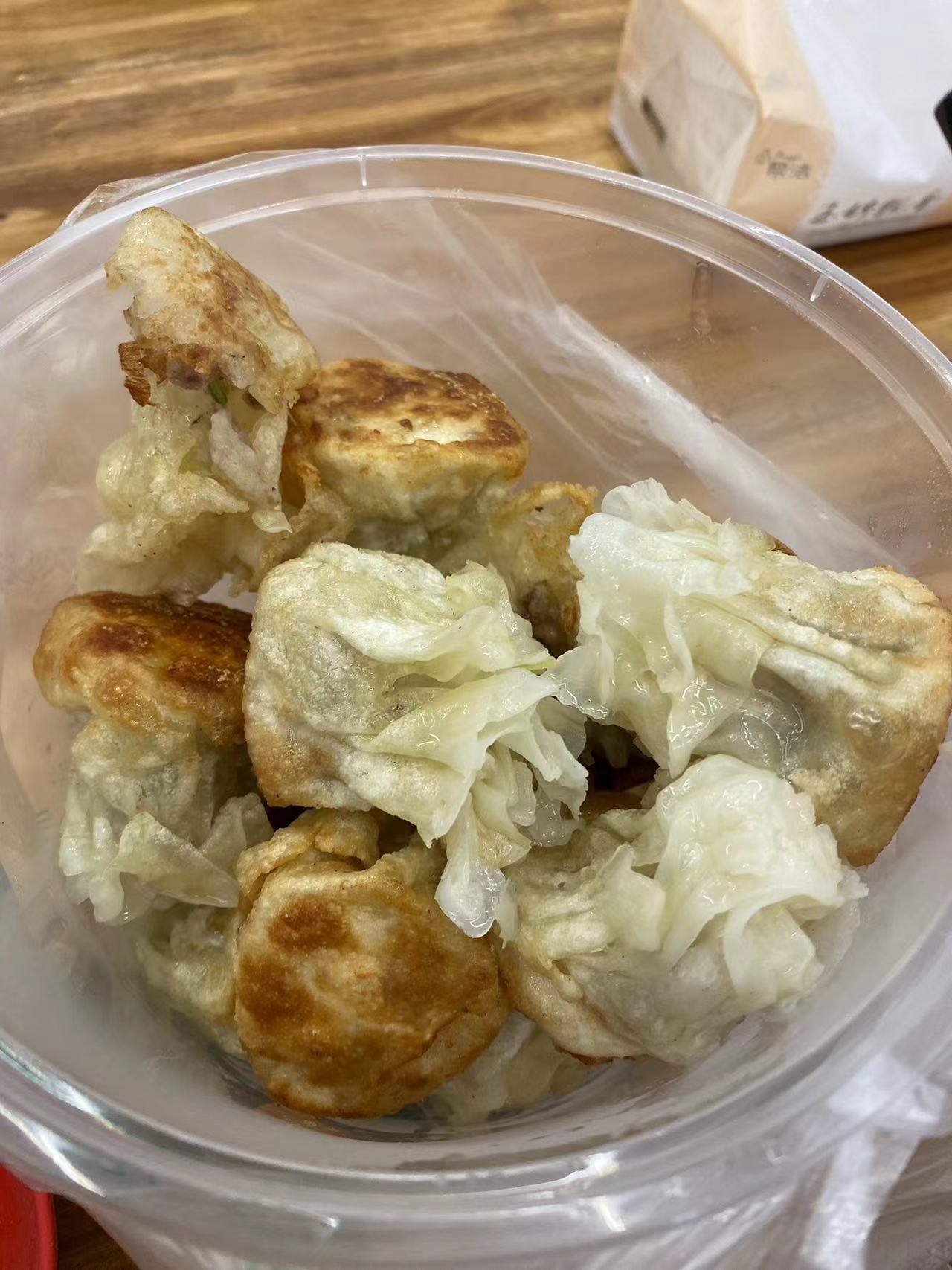
Leshan paper-skin shumai is different from Chengdu shumai and northern shumai. Chengdu shumai has a filling mixed with meat bits and glutinous rice, tasting like Cantonese zongzi; northern shumai is filled with beef or lamb. Leshan shumai has a meat filling more like the northern style, with very thin skin, pan-fried to a crispy texture. In the past, when eating shumai, I disliked the pleated top the most, because when steaming, that part was often undercooked and had a raw dough texture. But Haihuiyuan’s shumai completely solved this problem—they perfected everything except customer service (poor service attitude is also a hallmark of Sichuan snacks). Not only are the shumai thin-skinned and generously filled, but the dipping sauce (Sichuan calls it zhanshui) is also distinctive; the chili oil seems to have a hint of lemon juice in it.
After leaving Haihuiyuan, I bought three skewers of fried tofu coated in sweet and sour sauce from a street vendor—it’s a street snack that’s become trendy in Leshan in recent years, like shaved ice (Chinese gelato), but the taste was mediocre, so I don’t recommend it.
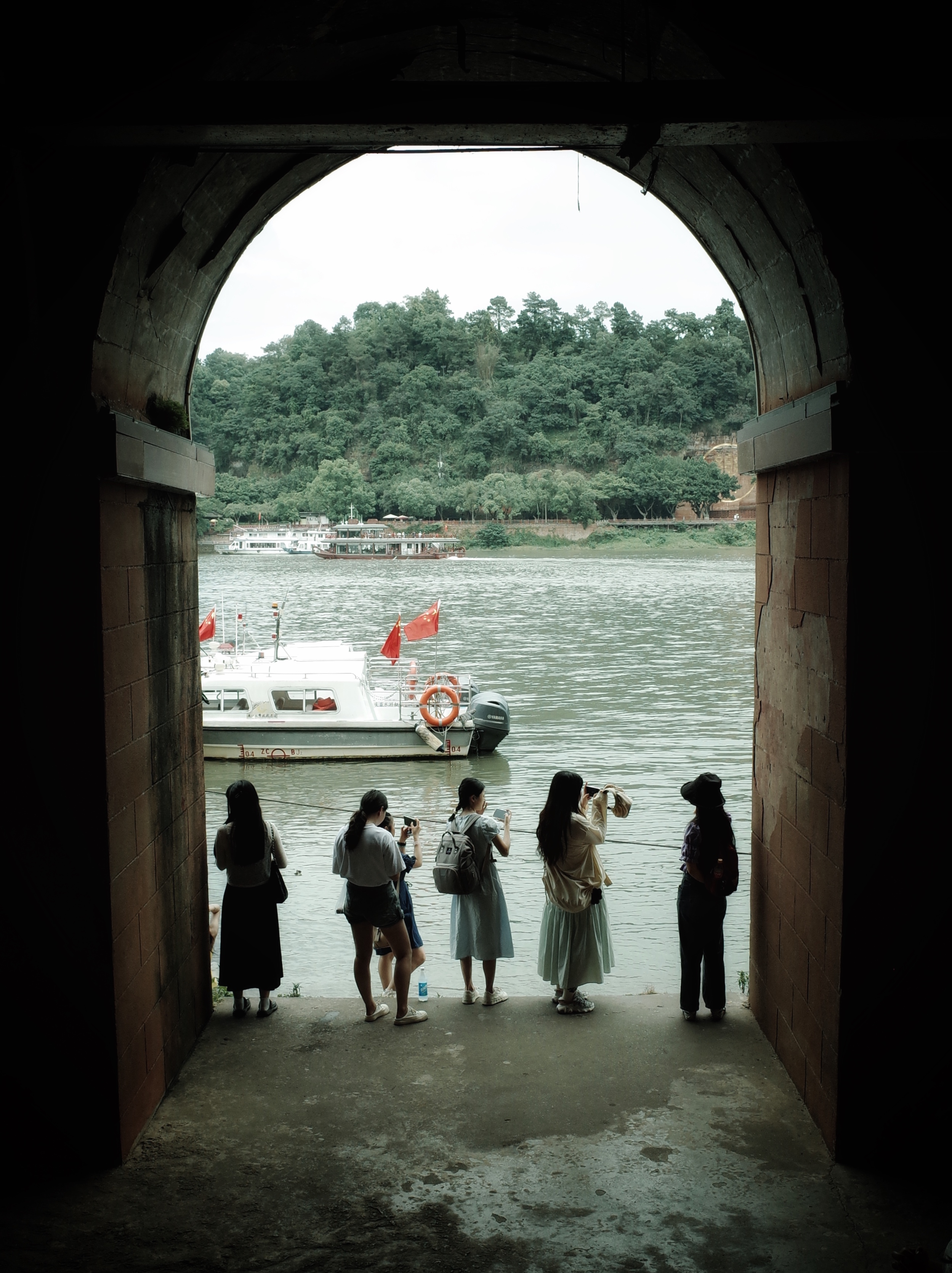
Walking southeast from the Shangzhongshun街区, you can see the Dadu River. Along the river, there are several ferry crossings where you can gaze at Lingyun Mountain on the opposite bank.
There are many small pavilions along the river where local elderly gather to play a Sichuan card game called “Er Qi Shi” (贰柒拾). This card game uses ten numbers from 1 to 10 in two suits, red and black. Like mahjong, you can form melds and declare a win; essentially, it’s a probability-based scoring game where you form card patterns and calculate points.
It’s said that the reason they use these long paper cards is that in the past, when materials were scarce, people made the cards from waste paper used in factories to fill materials. This Leshan “Er Qi Shi” is likely a variant of Sichuan long cards, which were once popular in the Huguang region as well, and many elderly people know how to play. But nowadays, the local young people are all addicted to Honor of Kings, and in a few years you may only be able to hear an instructor explain the gameplay at an intangible cultural heritage museum.
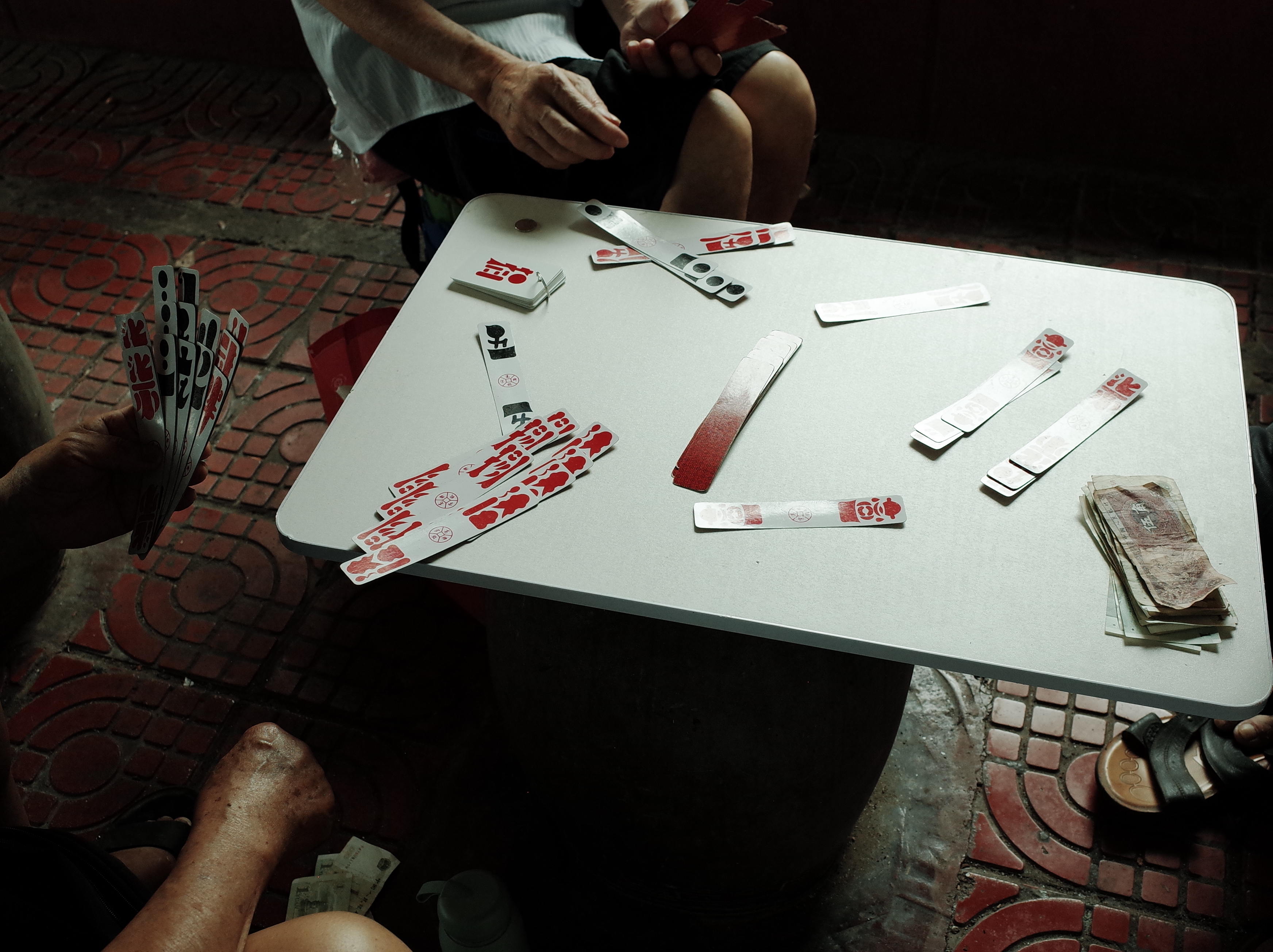
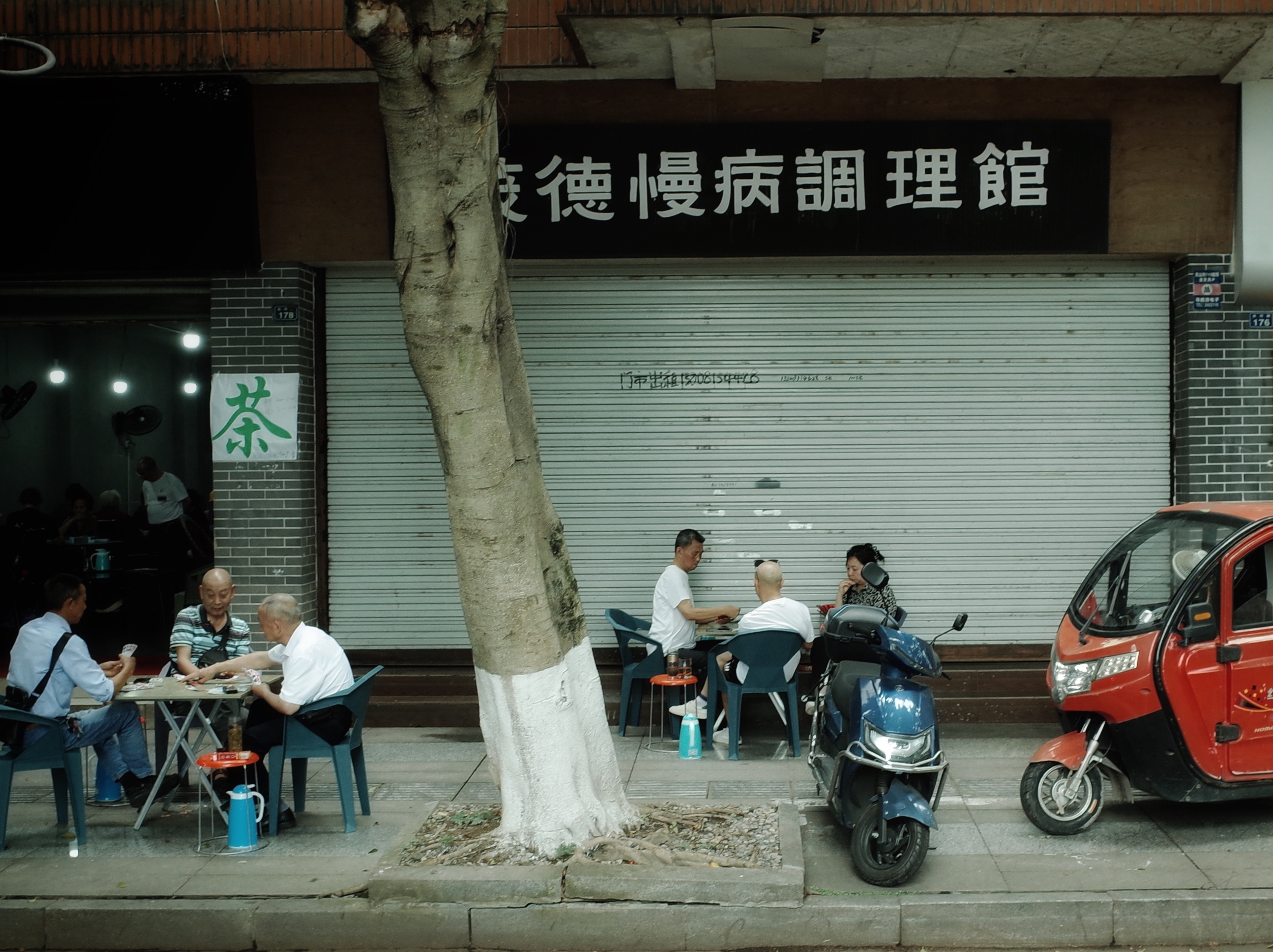
I really appreciate this kind of scene you can see everywhere on the streets of Leshan: teahouses, small tables for playing cards. There’s no need for a special venue—within a three-meter radius of a tree’s shade, you have a natural chess and card room for the local elderly. As I get older, I’m increasingly enjoying these timeless pleasures, like watching sports after work, or opening Douyu to watch Warcraft competitions. These events’ biggest characteristic is that the rules almost never change. They’re not like Honor of Kings, where a few days away makes you feel like a stranger, periodically updating gameplay and adding new characters. People aren’t computers, let alone so-called “users”—I don’t need frequent updates. The older I get, the more my dopamine depends on simple, unchanging things.
Along the Dadu River: in the distance, the Buddha sits for a thousand years, with the three rivers converging at his feet, the water creating a chalk-line-like division between the Min and Dadu rivers. Nearby, an elderly man swims in the rushing current.
After finishing my Leshan trip, I rushed back to Chengdu and was already so sleepy I could barely keep my eyes open, sleeping straight through until 2 PM the next afternoon. I found that a friend had sent a picture in our WeChat group in the morning.
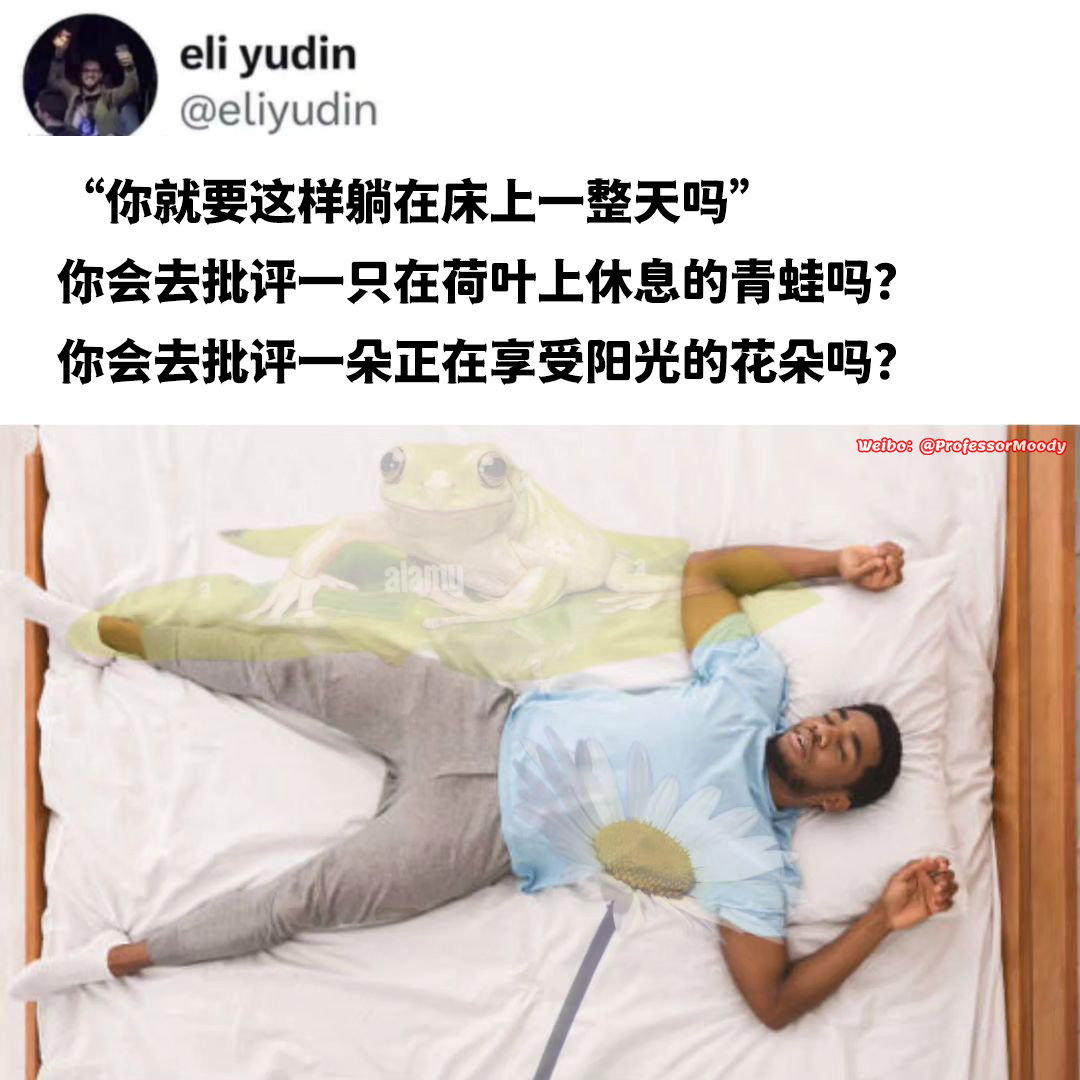
Coming back from Leshan, I suddenly understood that saying: if wasting time makes you happy, then the time wasn’t wasted.